
Troubleshooting Your Home Fetal Doppler: Why the Heartbeat Might Be Elusive
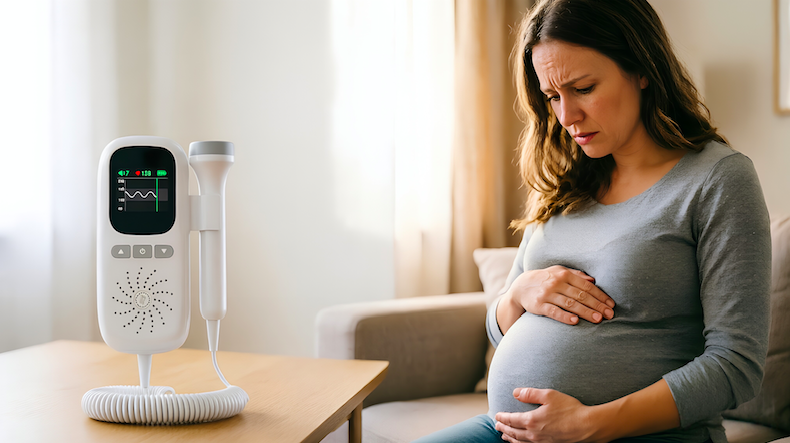
For many expectant parents, a home fetal Doppler is a source of immense joy, offering a way to bond with their baby between prenatal visits. However, it is equally common to experience moments of panic when the familiar galloping sound cannot be found. If you are struggling to locate your baby’s heartbeat, take a deep breath. In the vast majority of cases, this is a completely normal occurrence caused by technical or developmental factors rather than a medical emergency.
Timing and Developmental Factors
The most frequent reason for an unsuccessful search is simply gestational age. Fetal Dopplers are notoriously difficult to use before the 12-week mark. At this early stage, the baby is still very small and often situated deep within the pelvic cavity, making the heartbeat incredibly faint. Even if you have passed the 12-week milestone, the baby may still be too tiny or positioned in a way that makes the sound waves difficult to bounce back to the probe.
Positioning and Physical Barriers
Babies are highly active and frequently change positions. If your baby is facing your spine, tucked away in a corner, or resting behind the placenta, the sound may be muffled. Additionally, if you have an anterior placenta (attached to the front wall of the uterus), it acts as a thick acoustic cushion that absorbs the ultrasound waves, making detection significantly harder in the early and mid-trimesters.
Maternal anatomy also plays a role. A thicker layer of abdominal tissue can attenuate the ultrasound signal. Furthermore, an empty bladder can make finding the heartbeat more challenging; some healthcare providers recommend having a slightly full bladder during early scans because it helps lift the uterus and provides a better acoustic window.
Technique and Equipment Variables
How you use the device is just as important as the device itself. Proper application of ultrasound gel is critical, as it eliminates air pockets and allows sound waves to travel smoothly through the skin. Using too little gel, or conversely, using so much that the probe loses contact, will result in static or silence.
Your physical technique matters as well. Instead of dragging the probe quickly across your stomach, try placing it just above the pubic bone and angling it downward toward the pelvis. Move in slow, deliberate increments. If you hear a rhythmic “whooshing” sound, check the rate. A maternal heartbeat or placental blood flow typically ranges from 60 to 100 beats per minute, whereas a healthy fetal heartbeat usually sits between 110 and 160 beats per minute.
When to Seek Professional Guidance
While a home Doppler is a wonderful tool for reassurance, it should never replace professional medical care. Handheld consumer devices lack the sophisticated imaging capabilities of clinical ultrasounds and can sometimes provide false reassurance by picking up maternal blood flow. If you are unable to find the heartbeat and are also experiencing a noticeable decrease in fetal movement, unusual spotting, cramping, or any other symptoms of concern, do not wait. Contact your obstetrician or midwife immediately. They have the expertise and advanced equipment to accurately assess your baby’s well-being and provide the peace of mind you deserve.