
Decoding Your Pulse Oximeter: A Complete Guide to SpO₂, PR, and PI
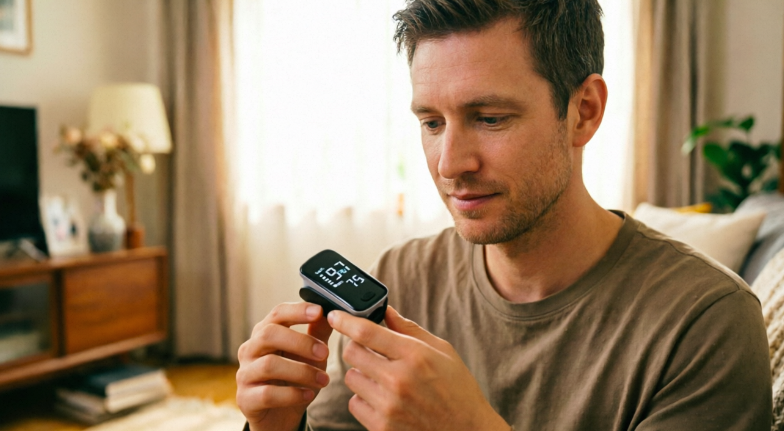
In the world of modern healthcare, the pulse oximeter has become an essential tool. Whether used in a busy ICU or for home monitoring of respiratory conditions, this small device provides a window into our body’s internal performance.
However, looking at the digital display can sometimes be confusing. You see three distinct numbers – SpO₂, PR, and PI – but what do they actually tell you about your health?
This guide breaks down these three critical parameters, explaining their normal ranges and why they matter for accurate health monitoring.
1. SpO₂: The Oxygen Indicator
What is it?
SpO₂ stands for Peripheral Capillary Oxygen Saturation. Simply put, it estimates the amount of oxygen-carrying hemoglobin in the blood compared to the total hemoglobin. It is the primary metric for assessing respiratory efficiency.
The “Fuel Gauge” Analogy:
Think of SpO₂ as your body’s fuel gauge. Just as a car needs gas to run, your organs need oxygen to function. If the level drops too low, your body cannot perform essential tasks.
📊 Understanding the Numbers
• 95% – 100%: Normal Range. Your body is oxygenating efficiently.
• 90% – 94%: Mild Hypoxemia. This suggests your oxygen levels are lower than ideal. It warrants monitoring and consultation with a doctor.
• Below 90%: Clinical Concern. This indicates significant hypoxemia. Immediate medical attention is usually required.
Note: Patients with chronic conditions like COPD may have different baseline targets prescribed by their physicians.
2. PR: The Heartbeat Tracker
What is it?
PR stands for Pulse Rate. This number represents the number of times your heart beats per minute (BPM). The pulse oximeter detects this by sensing the pulsatile flow of blood in your capillaries.
Why it Matters:
While SpO₂ measures oxygen, PR measures the “pump” that delivers it. An abnormal heart rate can indicate stress, physical exertion, or underlying cardiovascular issues.
📊 Understanding the Numbers (Adults)
• 60 – 100 BPM: Normal Resting Heart Rate. This is the standard range for a relaxed adult.
• < 60 BPM (Bradycardia): A slower heart rate. This is often normal for athletes but can indicate issues in others.
• > 100 BPM (Tachycardia): A faster heart rate. This can be caused by anxiety, fever, exercise, or heart conditions.
📶 3. PI: The Reliability Score
What is it?
PI stands for Perfusion Index. This is often the most misunderstood number, but it is arguably the most important for data accuracy. PI measures the strength of the pulse signal at the sensor site (usually the fingertip).
It is expressed as a percentage (%). It represents the ratio of pulsatile blood flow (arterial) to non-pulsatile blood flow (venous/capillary/static tissue).
Why You Should Check PI First:
Before you look at SpO₂ or PR, check the PI. A low PI means the signal is weak, and the other numbers might be inaccurate.
📊 Understanding the Numbers
• 0.2% – 1.0%: Weak Perfusion. The signal is weak. This often happens if your hands are cold or circulation is poor. Readings may fluctuate.
• 1.0% – 5.0%: Normal Perfusion. The device is getting a good signal; readings are likely accurate.
• > 5.0%: Strong Perfusion. Excellent blood flow and a very stable, reliable reading.
🔗 How SpO₂, PR, and PI Work Together
A high-quality pulse oximeter doesn’t just display numbers; it synthesizes them

The “Big Picture”:
If you see a low SpO₂ but a very low PI (e.g., 0.3%), the low oxygen reading might be an error caused by cold hands rather than a respiratory issue. Warming the hands might raise the PI and correct the SpO₂ reading.
⚠️ Factors That Affect Accuracy
Even the best medical devices can give false readings if conditions aren’t right. To ensure the most accurate data:
1. Temperature: Cold hands restrict blood flow (lowering PI). Warm your hands before testing.
2. Movement: Shivering or shaking creates “noise” that confuses the sensor. Keep still.
3. Nail Polish: Dark colors (especially black or blue) can block the light sensors. Remove polish if possible.
4. Ambient Light: Direct sunlight or strong halogen light can interfere with the sensor. Cover the device with a cloth if necessary.
🏥 Applications in Home and Clinical Care
Understanding these three metrics is vital for:
• Chronic Disease Management: Monitoring COPD, Asthma, or Heart Failure.
• Post-Operative Care: Ensuring patients are recovering well after surgery.
• Sports & Fitness: Athletes use PR and SpO₂ to monitor training intensity and altitude acclimatization.
• Sleep Studies: Identifying drops in oxygen during sleep (Sleep Apnea).
Conclusion
A pulse oximeter is more than just a gadget; it is a powerful diagnostic tool. By understanding SpO₂ (Oxygen), PR (Heart Rate), and PI (Signal Strength), you can ensure that you are not just collecting data, but collecting accurate data that leads to better health decisions.
*Disclaimer: This article is for informational purposes only and does not constitute medical advice. Always consult with a healthcare professional regarding medical conditions and readings.